ROLE
UX Research
+ Physical Prototype
TEAM
04 Designers
METHODS
User Research
+ Figma Design
DELIVERABLE
Mobile
Prototype
OVERVIEW
Electronic waste has grown rapidly over the past few decades, and discarded chargers and accessories make up a significant portion of this problem. As new devices enter the market and older technologies are phased out, outdated phone and laptop chargers are often stored away or disposed of improperly—contributing to landfill accumulation, environmental pollution, and resource loss.
Focusing on the end-of-life stage of chargers, our team examined how a single, widely used smartphone charger contributes to this broader issue. We conducted research to understand user behaviors, environmental impact, and opportunities for intervention. This report outlines our research process, key findings, and the design solution we developed and tested to reduce the environmental footprint associated with charger disposal.
CHOSEN PRODUCT
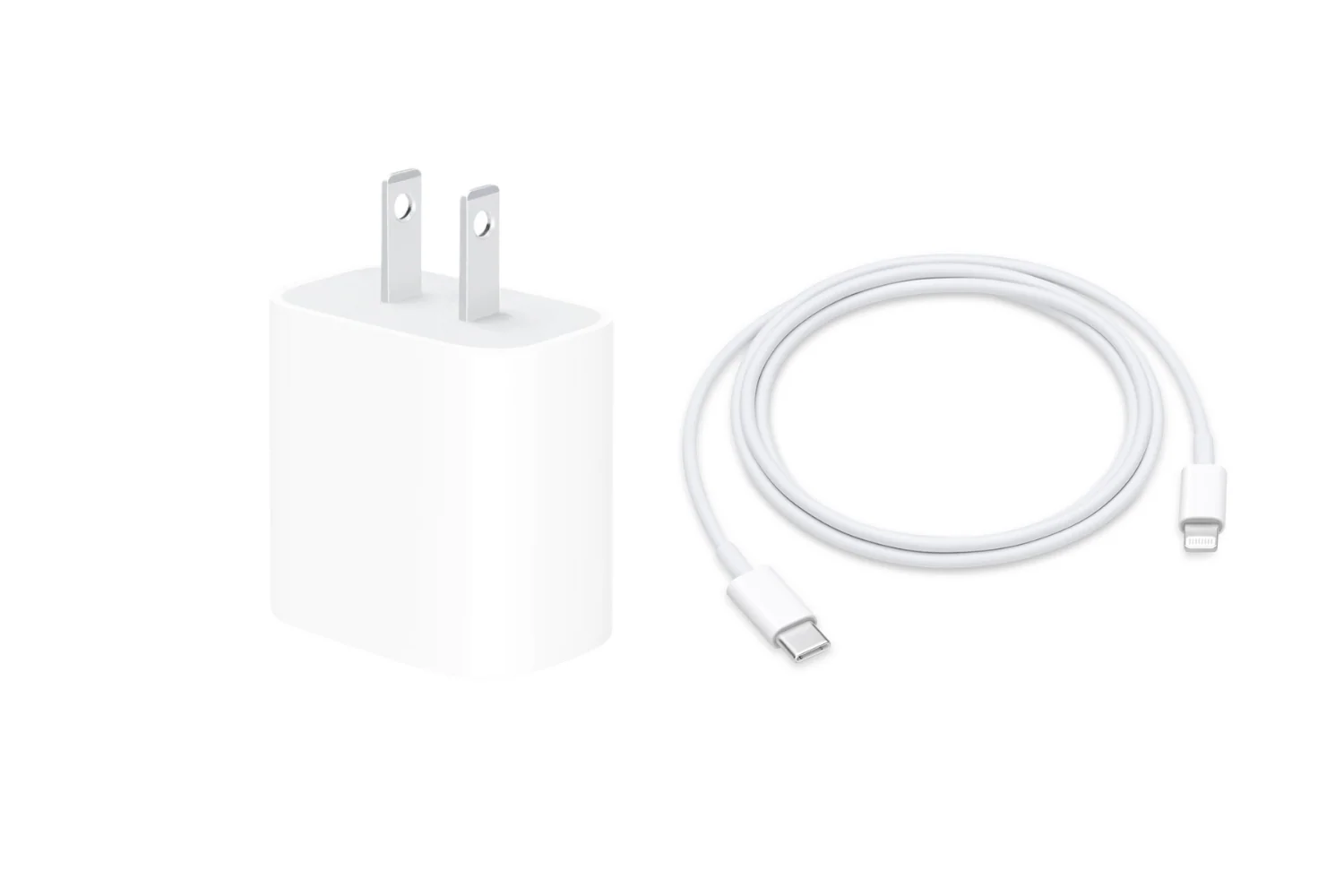
60W USB-C Charge Cable (1m) with 20W USB-C Power Adapter (the charging brick)
LIFE CYCLE ASSESSMENT
After analyzing the different stages of our charger’s life cycle, which includes extraction, manufacturing, transportation, packaging, use, and end-of-life, we began to realize how challenging it would be to make changes in the production process. Additionally, the use phase did not provide us enough room for analysis due to its simple usage function. In the end, we identified a clear direction to redesign the end-of-life phase associated with e-waste produced by Apple’s chargers.
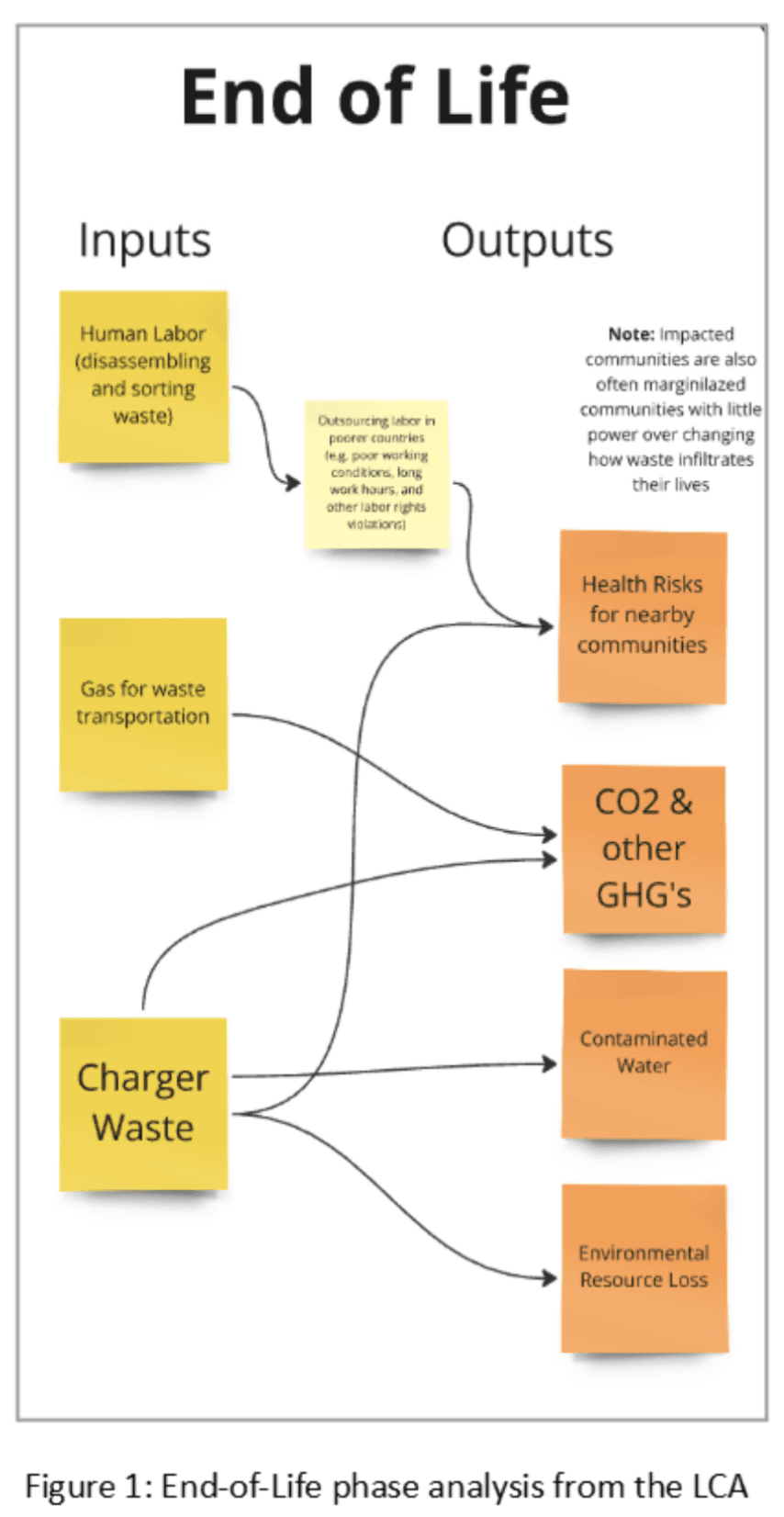
We considered how improperly recycled chargers are often stored away or discarded in landfills, leading to environmental risks such as the release of toxic chemicals, greenhouse gases, and contamination of groundwater. This improper disposal also results in the loss of valuable materials that could otherwise be recovered and reused.
Based on these findings, we saw the potential of redesigning the current charger recycling program at Apple. While keeping in mind the current recycling methods, our goal was to increase consumer awareness, proper disposal, and promote effective recycling to have a greater impact on the end of life stage of the charger life cycle.
STAKEHOLDERS
With our chosen product and life cycle stage, we identified several key stakeholders: Consumers, Apple Executives, Apple Employees, and the Environment. The consumers are the people who buy, use, and either keep, throw away, or recycle their chargers. It’s their behavior we ultimately aim to influence. Apple executives are those who will decide whether or not to implement our redesign solution and who must consider the company’s brand image, financial goals, as well as consumer needs before disrupting any current systems. For instance, they might be hesitant to implement a recycling program if it requires too many changes, or disrupts the supply chain. We also have to consider Apple’s employees. They would be the ones disassembling, sorting, and finding ways to most effectively reuse the chargers that are recycled, or the ones building the technology that does. Finally, we thought about the environment as a stakeholder as the purpose of this redesign was to mitigate the environmental impact of a certain product.
RESEARCH
RESEARCH METHODS
We first conducted four 10-15 minute semi-structured interviews. These interviews provided mainly qualitative insights into the underlying motivations and challenges influencing users’ recycling behaviors. We prepared questions to ask participants about their familiarity with e-waste recycling programs, their personal experiences, and their suggestions for potential improvements. This method provided valuable information that guided our survey questions.
To complement the information we gathered from interviews, we conducted a survey to gather more quantitative data on users’ habits, awareness, and experiences related to recycling chargers. It included a mix of multiple-choice and scale-based questions to explore key aspects of charger disposal. The survey was distributed to friends, family, and on other platforms such as slack and discord for all device (phone, tablet, and laptop) charger users. Participants’ responses provided insights into general trends about e-waste disposal, and allowed us to further pinpoint areas where users struggle.
To complement the information we gathered from interviews, we conducted a survey to gather more quantitative data on users’ habits, awareness, and experiences related to recycling chargers. It included a mix of multiple-choice and scale-based questions to explore key aspects of charger disposal. The survey was distributed to friends, family, and on other platforms such as slack and discord for all device (phone, tablet, and laptop) charger users. Participants’ responses provided insights into general trends about e-waste disposal, and allowed us to further pinpoint areas where users struggle.
RESEARCH FINDINGS
From our four interviews, we narrowed our focus to two recurring themes. Our findings revealed a lack of convenience and insufficient incentives as the main factors hindering charger recycling.
Users frequently brought up the absence of convenient recycling options. For instance, one interviewee noted that their nearest recycling location was a 30-minute drive, making it rather impractical. Others emphasized that recycling stations are often difficult to locate. As one participant put it, “The more convenient, the better. If I could just return it at various places and have many platforms accepting it, it would increase my willingness to return it for recycling.”
Interviewees consistently emphasized the importance of incentives and rewards in motivating recycling behavior. Many expressed interest in tangible benefits, such as discounts on new products or small monetary rewards, noting that trade-in programs for phones already operate this way. One participant said that even a 5% discount on a new charger would motivate them to recycle, while others proposed brand collaborations offering perks like $10 off or a free ice cream coupon. Overall, our findings suggest that even modest incentives can significantly increase user participation in charger recycling.
Following the interviews, we sent out our survey and received 49 responses. The survey results allowed us to effectively gauge user recycling habits pertaining to chargers. About 80% of respondents to the survey stated that they typically stored their unused chargers away, and currently, only about 4% of respondents found a way to recycle their chargers (Figure 2).
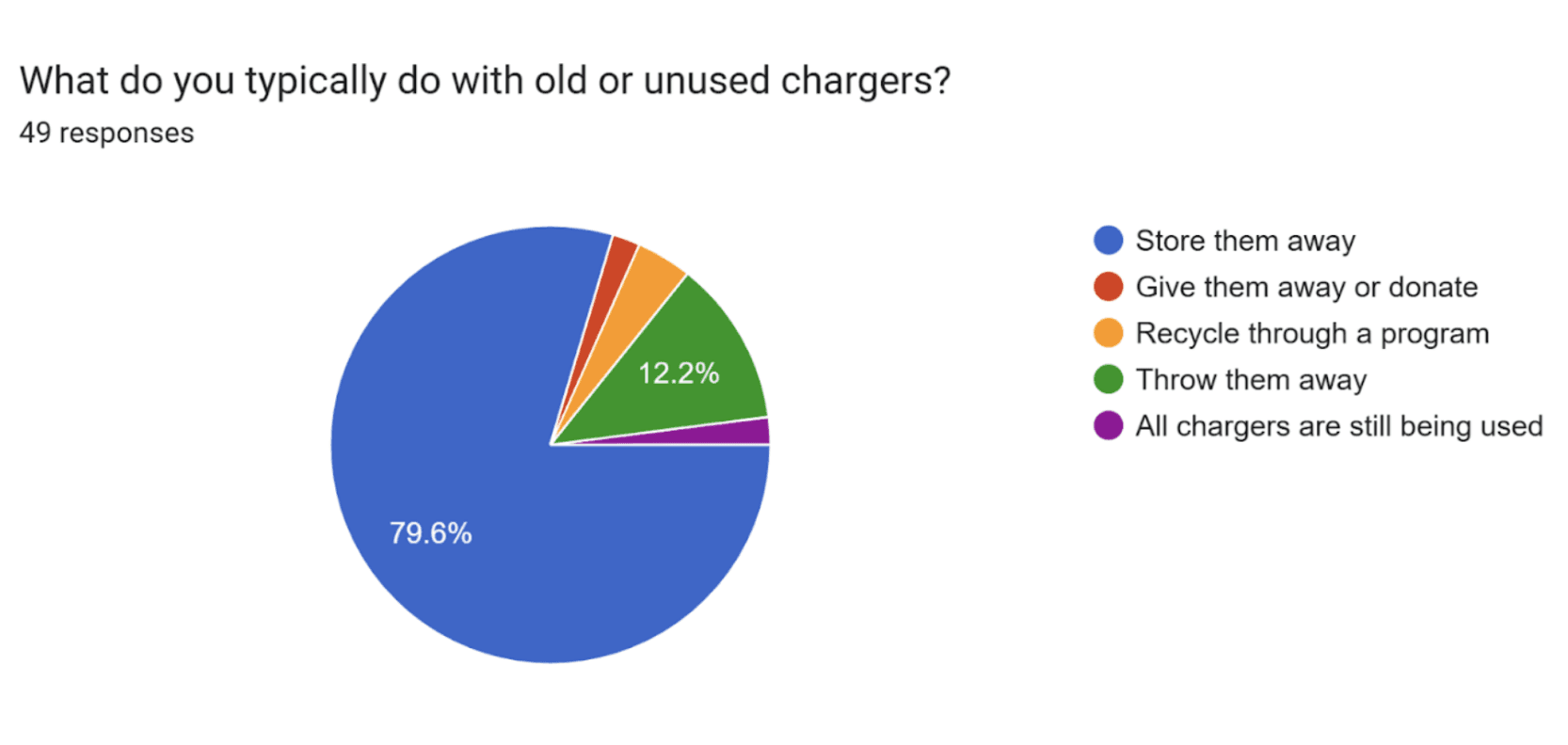
Figure 2: Responses to the question: “What do you typically do with old or unused chargers?”
Following the interviews, we sent out our survey and received 49 responses. The survey results allowed us to effectively gauge user recycling habits pertaining to chargers. About 80% of respondents to the survey stated that they typically stored their unused chargers away, and currently, only about 4% of respondents found a way to recycle their chargers
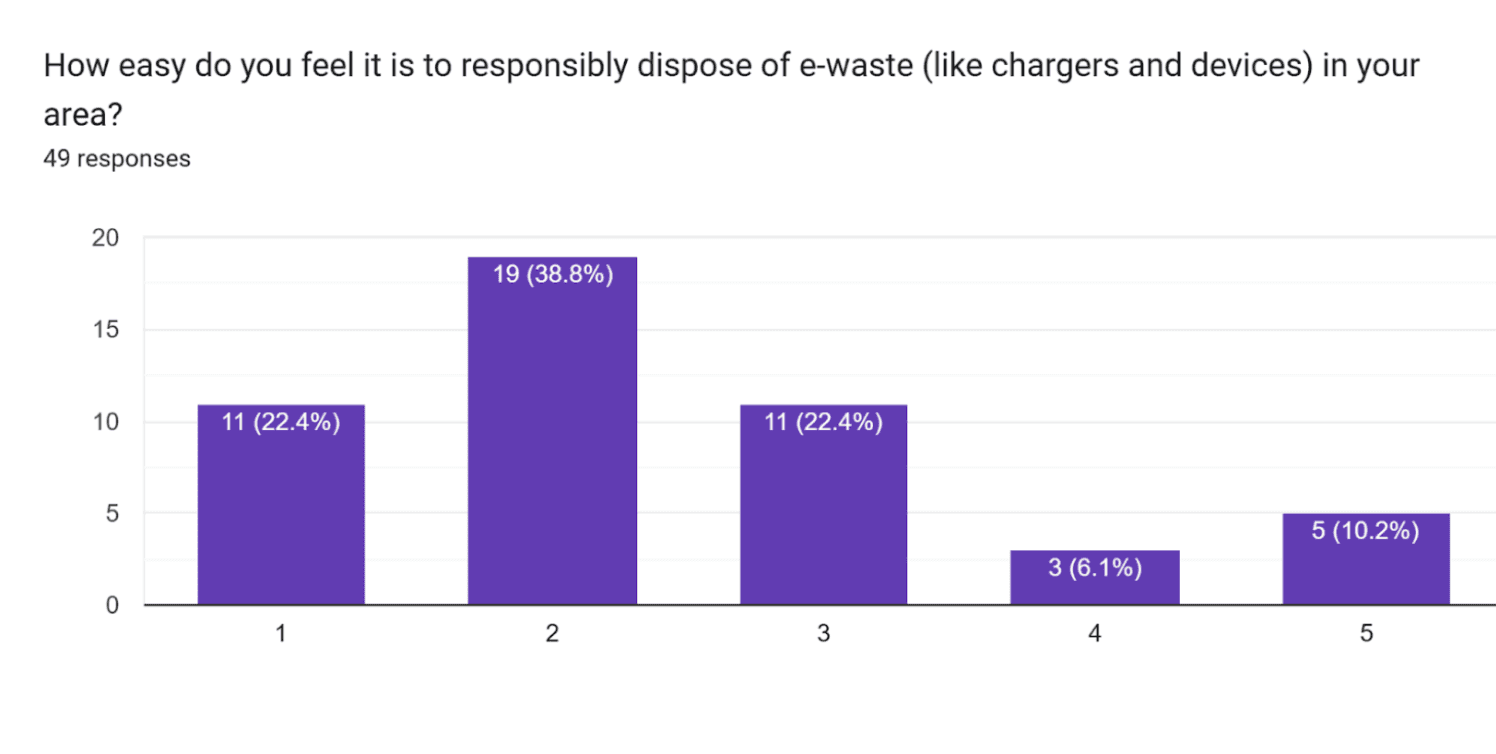
Figure 3: Responses to the question: “How easy do you feel it is to responsibly dispose of e-waste (like chargers and devices) in your area?”
This data aligned with our interview findings in that there’s simply not enough incentive for users to go out of their way to recycle. It’s a simple process, yet it feels too demanding in exchange for no physical reward. This inspired our redesign idea and prompted us to focus on creating a more straightforward and simplified e-waste recycling program, along with a way to encourage participation in that program.
IMPACT ASSESSMENT
CURRENT ENVIRONMENTAL IMPACTS
After deciding to focus on the end-of-life stage of chargers, we conducted an impact assessment to quantify their contribution to e-waste–related greenhouse gas emissions. Our analysis examined global charger e-waste, Apple’s charger waste in the EU, and GHG emissions per pound of annual e-waste. Based on these metrics, we estimated that discarded chargers—both bricks and cables—contribute approximately 297.5 million pounds of GHG emissions per year worldwide.
REDESIGN SOLUTION
Insights from our user research directly guided our redesign. Convenience, recycling education, and incentives emerged as the primary user concerns. To address these needs, our redesigned solution includes QR code recycling instructions and a pre-paid mail-in recycling envelope, making it easier and more intuitive for users to properly recycle their old chargers.
IMPACT ESTIMATE
Our redesign introduces foldable, pre-paid recycling envelopes inside Apple USB-C charger packaging, allowing users to easily mail back both the charging block and cable for responsible recycling. Based on our estimate that 6% of iPhone users would recycle three chargers each, we calculated a potential 38,486,893 lbs of GHG savings per year.
Our model also factored in the environmental cost of producing the envelopes, which use bamboo-based recycled paper, a more sustainable alternative to virgin fibers. Even accounting for 2,049,571 lbs of GHG emissions produced by unused envelopes, the system still results in a net savings of 36,437,322 lbs of GHG annually from recycling Apple USB-C chargers.
LIMITATIONS
We acknowledge that there may be unintended shipping emissions that are released through our mail-back program. Despite that, we anticipate that the use of lightweight, sustainable materials coupled with our proximity-based shipping method will help reduce that to an insignificant margin.
REDESIGN PROTOTYPE
PHYSICAL PROTOTYPE
Our redesigned solution places a pre-paid mail-in recycling envelope inside the iPhone box, positioned beneath the cable tray with the recycling logo visible. Once the tray is removed, users can access the envelope, which includes a pre-addressed shipping label and expands to hold up to three iPhone or MacBook chargers. The front provides clear mailing instructions and highlights the incentive users will receive upon returning it to their nearest Apple Store, while the back features a QR code linking to information about e-waste impacts and Apple’s trade-in programs. (Figures 4-8)

Figure 1: Expanded Envelope Front

Figure 2: Expanded Envelope Back
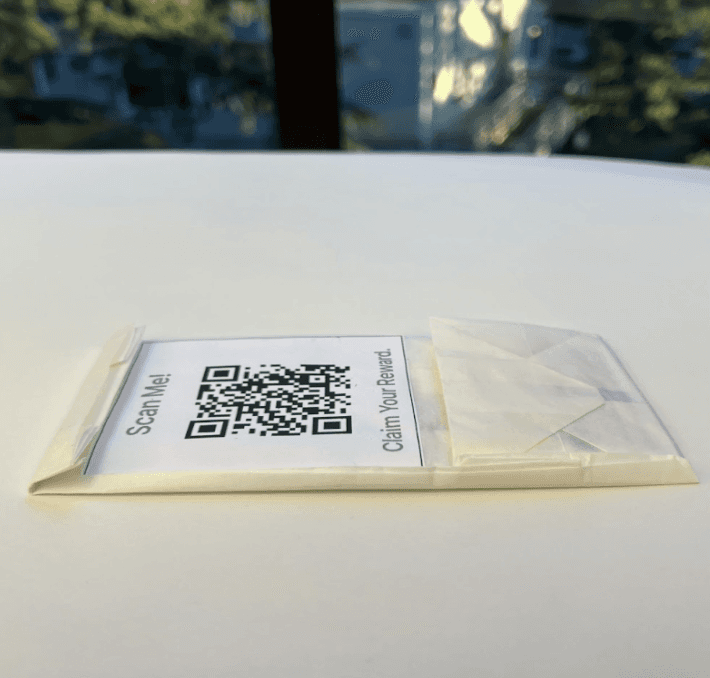
Figure 3: Envelope After Lifting Compartment
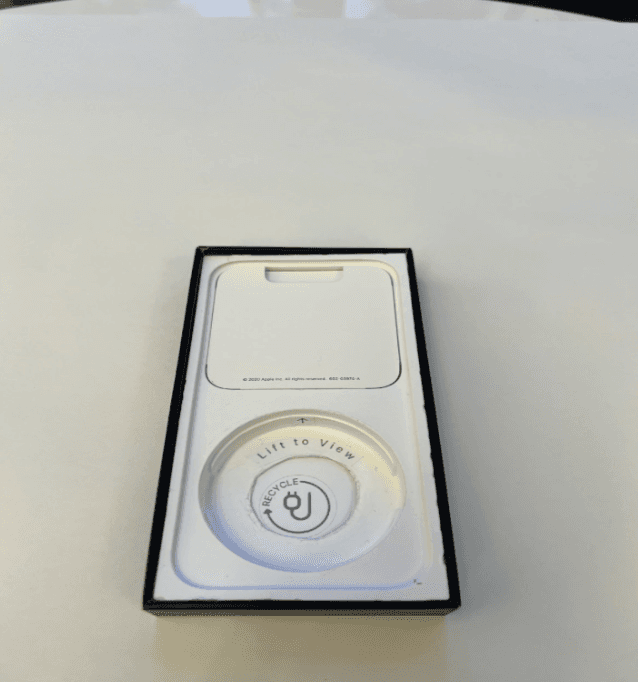
Figure 4: Removed Charging Cable
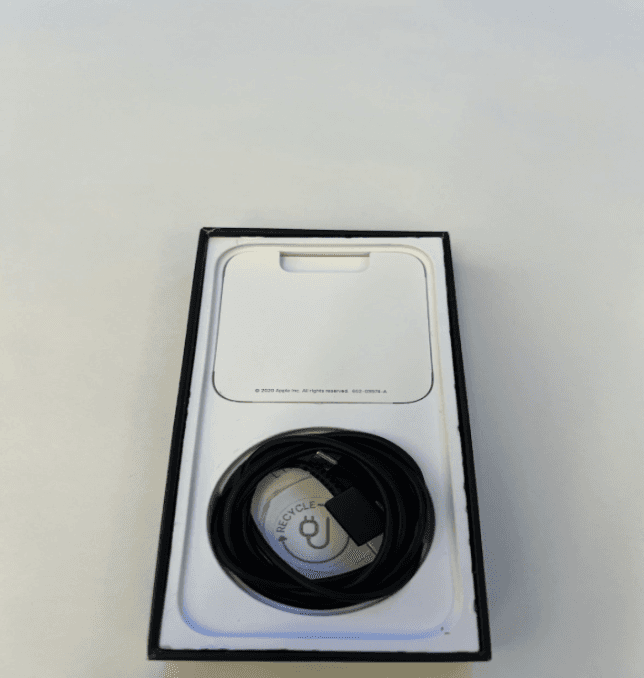
Figure 5: View After Removing Phone
DIGITAL PROTOTYPE
To redesign the Apple trade-in website, we maintained the existing visual style while highlighting the charger recycling process. We introduced a charger icon to the homepage scroll bar, which prompts users with the question “Have any chargers lying around?” (Figure 12). Selecting this section directs users to a rewards page showcasing the 10% Apple Music discount offered for recycling old chargers, along with two recycling pathways. For online recycling, users can follow instructions to mail in their chargers using the provided envelope, with an option to reprint lost labels (Figures 9 and 11). For in-person recycling, the site offers simple step-by-step instructions for bringing chargers to a nearby Apple Store (Figure 10).
EVALUATION
USER TESTING
We assigned three users the task of unboxing the physical prototype and navigating to the corresponding online platform. They had 20 minutes to locate the envelope, scan the QR code, and understand the recycling process. All users completed the task within 10 minutes. Afterward, we conducted a post-test survey to assess both the usability and desirability of the prototype redesign. On a scale from 1 to 5 (1 being very simple and 5 being very difficult), the average score for usability was 2.33, indicating that the task was somewhat confusing; however, the limited sample size prevents the data from being conclusive.
We also asked participants, “Do you feel a sense of responsibility after recycling?” One user answered “yes,” and two answered “maybe” (with no one selecting “no”). However, we acknowledge that the responses to this question may not be fully accurate, as they do not reflect the universal experience of recycling or receiving the incentive.
We also received feedback during our user test to include additional recycling instructions and an option to reprint the mailing slip directly on the website interface which we addressed and updated after user testing (Figure 9).
LONG TERM EVALUATION
GOAL
When determining a long-term goal for this redesign, we would consider both sustainability in design and sustainability with design. We would ideally align it with existing frameworks such as the UN Sustainable Development Goals. One primary goal would be to reduce the amount of e-waste entering landfills or being stored away. This would not only impact manufacturing by encouraging the use of recycled materials but also decrease greenhouse gas emissions produced from e-waste.
MECHANISM
Our redesign heavily relies on the consumer’s participation in recycling programs. The most effective way to educate and encourage users to recycle would involve analyzing societal behaviors and practices. This evaluation would include tracking user rates (e.g., visits to the website via QR codes), return rates (e.g., the number of chargers sent back via envelopes), and user engagement (e.g., feedback and qualitative analysis).
METRIC
Our redesign would need to quantify responsible recycling over a longer timeframe. Return rates are already built-in metrics that can be recorded whenever a user sends back a package. However, interviews and surveys would also be essential for gathering qualitative insights, even though self-reporting might introduce biases.
METHOD
A key difference between the user testing plan and the long-term evaluation would be the methods of analysis. A larger, more in-depth life cycle assessment (LCA) would need to be conducted, with a particular focus on the end-of-life phase. This would involve analyzing specific outcomes such as reductions in e-waste and decreases in emissions.
SCOPE
Finally, the scope of a long-term evaluation would be broader and exist within a larger ecosystem of recycling options. We would assess how scalable our project is to other parts of the United States, particularly considering the availability and accessibility of recycling centers in rural areas.
REFLECTION
This project pushed us to confront the complexity of creating a truly sustainable product. We realized that every design change carries consequences; even a recycling program—often seen as inherently sustainable—can produce unintended environmental harm if not carefully executed. Adding mail-in envelopes, for example, raises questions about shipping emissions, material sourcing, increased product weight, the energy required to disassemble chargers, and the ethical and logistical implications of who performs that labor. These environmental and socio-political considerations emerged throughout the quarter, and given our limited time and expertise, we were unable to explore them as deeply as we would have liked before finalizing our redesign.
Despite these challenges, the project offered valuable insight into working within real constraints and thinking critically about sustainability. As one of our guest speakers emphasized, the most sustainable action is to reduce consumption altogether—a principle that no recycling program can surpass. Ultimately, this experience helped us better understand the broader impacts of the products we buy and the systems we participate in, shaping a more mindful approach to sustainability moving forward.