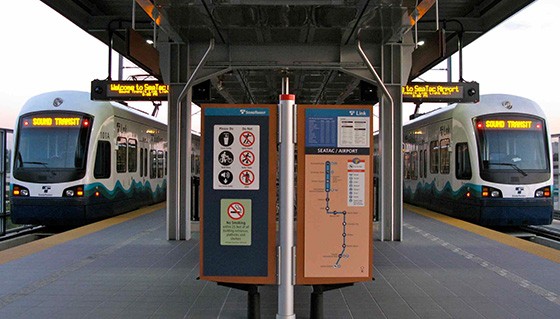
“How can we encourage students to utilize public transportation while maintaining cost-effectiveness and convenience?”
ROLE
TEAM
METHODS
DELIVERABLE
OVERVIEW
Terrific Transit is a point-based transit app that seamlessly integrates bus, toll, and light rail systems. It offers incentives and rewards to encourage increased public transit usage.
INTRODUCTION
Terrific Transit was a class project part of a two-quarter project aimed at exploring the foundations of Human Centered Design & Engineering. This was my first class in the major, and I came into it with little to no experience in user-centered design. On the first day of the autumn quarter, I was paired with three other students who were also beginning their journey in HCDE. Before conducting any primary research, we identified that we all had a similarly ambiguous relationship with the public transit system in Seattle and decided that this problem space was a great opportunity to explore how others felt about public transit and which specific pain points were worth addressing.
Due to the nature of the class, our research and design responsibilities were evenly split, as gaining experience in all areas of user experience was the project's overarching goal.
RESEARCH
COMPETITIVE ANALYSIS
Once we settled on this problem space, we started with primary research to understand the transit system and the key players operating within it. We began by conducting a semi-structured competitor analysis, evaluating existing market solutions designed to promote public transportation use. Our analysis included a review of four prominent service providers—Good To Go!, U-Pass, One Bus Away, and Link station ticket kiosks—covering a spectrum from hardware kiosks to digital applications. By assessing these solutions against key usability heuristics and inclusive design principles, we aimed to identify opportunities to enhance accessibility, improve ease of use, and ensure cost-effectiveness for diverse user groups.
USER RESEARCH
We conducted six interviews to understand the specific needs and preferences of our target user group. Our research aimed to explore why individuals opt to drive instead of utilizing public transportation, identify primary concerns about existing transit options, and uncover factors influencing users' transportation choices. Through these interviews, we found recurring themes such as convenience, cleanliness, safety, punctuality, and ease of access to transportation information. Participants frequently expressed concerns regarding delays, safety issues, and uncomfortable conditions on buses, whereas the reliability and punctuality of the Link light rail were viewed more positively. These insights gives us an understanding on the pain points of public transportation and allow us to develop our personas to conduct deeper research.
PROBLEM STATEMENT
“How can we encourage students to utilize public transportation while maintaining cost-effectiveness and convenience?”
Our user tests helped us identify a common behavioral predisposition against public transit, mostly present among students.
Since our product specifically targets the student demographic, we wanted to find a solution that positively changes their outlook on public transit while also aligning with their financial and lifestyle habits.
PERSONAS
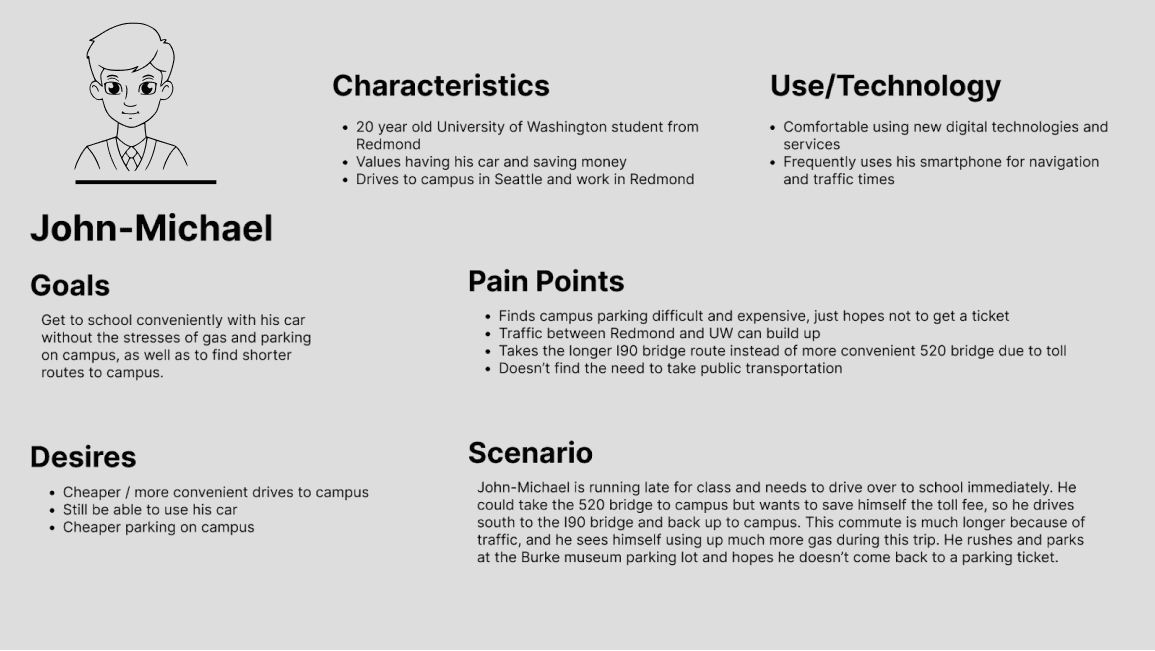
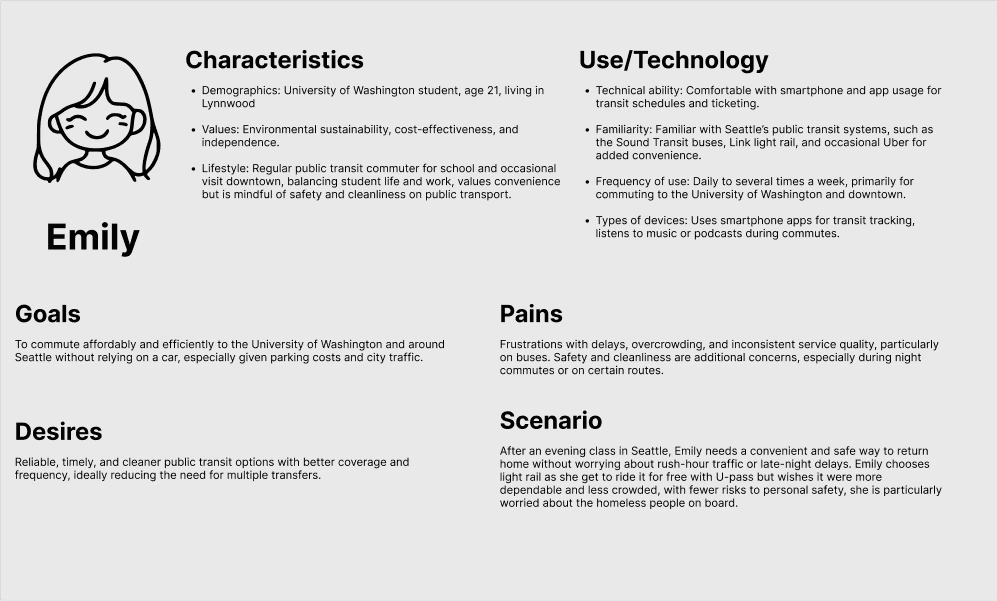
We developed detailed personas and user journey maps to gain deeper insight into how users might interact with our app in various scenarios. We created two primary personas, Emily and John-Michael, based on our interview data, capturing distinct preferences, behaviors, and concerns related to public transportation usage. The personas helped us visualize the diverse needs and priorities of potential users, from safety and cleanliness to punctuality and convenience. Next, our user journey maps allowed us to systematically examine interactions users might have with our proposed solution across different contexts, highlighting key pain points, opportunities for improvement, and moments where targeted design interventions could significantly enhance user satisfaction and engagement.
APPROACH
OUR SOLUTION
Toll-fee waiving transportation program: this solution provides users with discounts on toll fees and express lane fees across King County for users who frequently use public transportation.
Park-and-ride app with points system: this solution provides users with access to a securely monitored park-and-ride lot, and offers parking discounts for users that take public transportation.
STORYBOARD
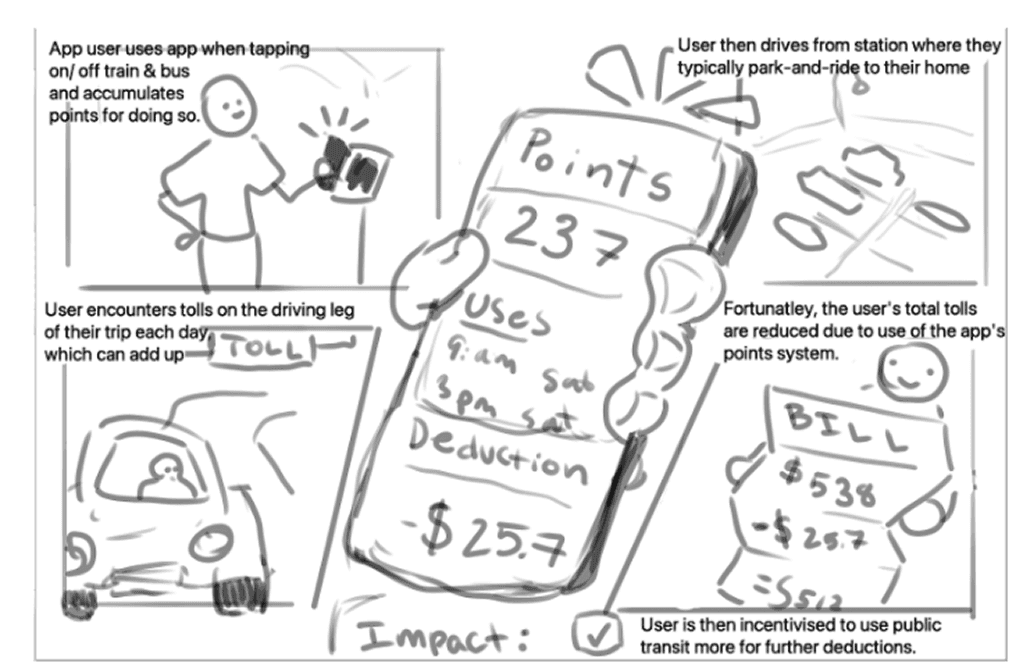
This rewards system addresses a main concern among our user responses: price. It makes public transportation an attractive investment for people who frequently travel and pay for other transportation passes. Effectively combining multiple methods of travel, this system creates an ecosystem of affordable transportation across Seattle and neighboring cities/districts.
REVISE KEY DESIGN REQUIREMENTS
Comfort: Makes using transit more comfortable than it is with existing methods.
Incentive: Create a clear and compelling incentive for drivers to choose public transport over using their vehicles
Time Efficiency: Must support or improve the timeliness of transit operations, or the amount of required time it takes for a passenger to use these systems.
Convenience: Easy to use and accessible to everyone.
FINAL DESIGN DECISION
Of the three ideas, the Park-and-Ride App with Points System shows the most promise. It directly addresses user pain points by providing convenience and incentives for transit use. This concept is also the most feasible of the three, as the skills required to develop and implement the app are within the realm of our expertise.
WIREFRAMING
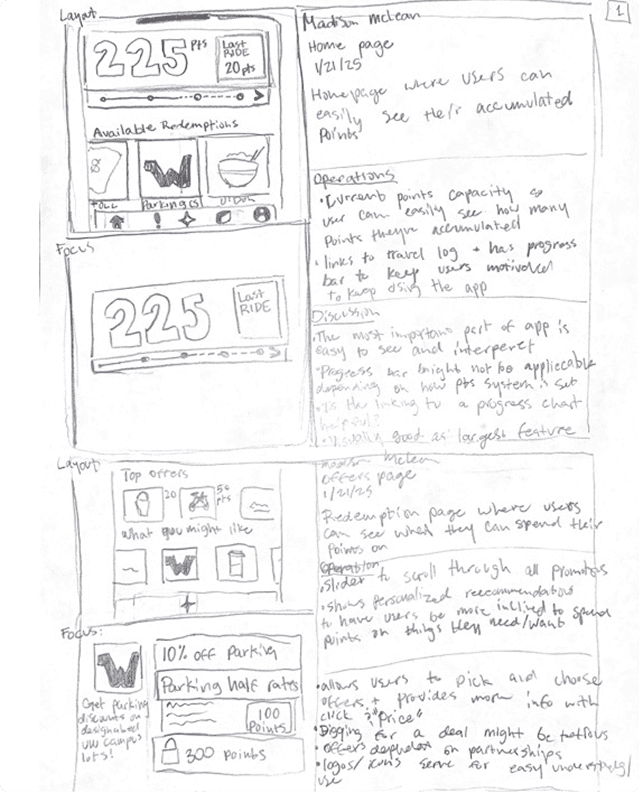
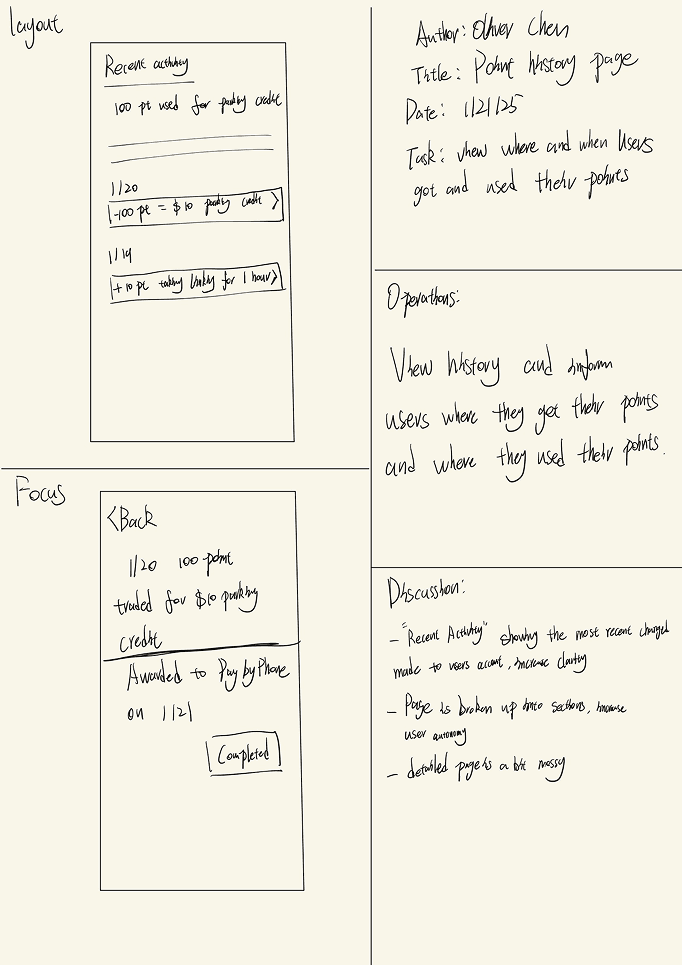
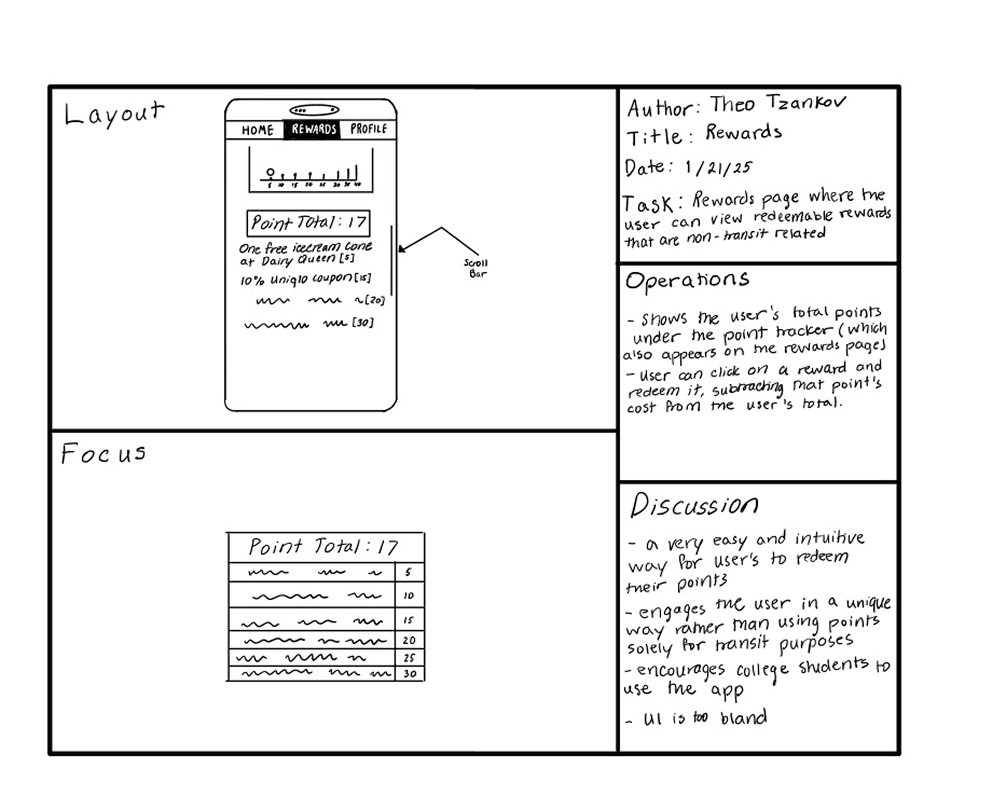
LOW-FI TESTING
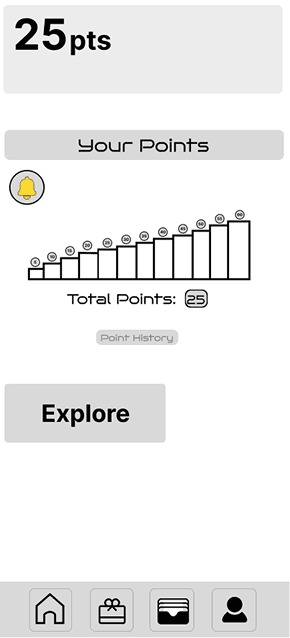
HOME
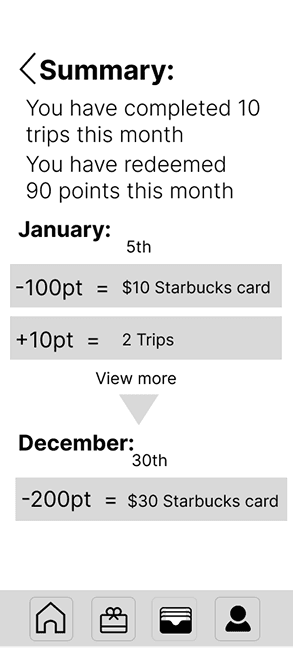
POINT HISTORY
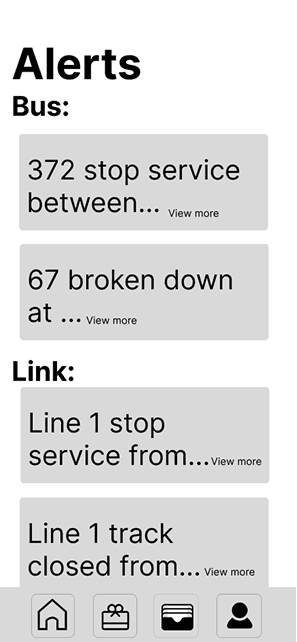
ALERTS
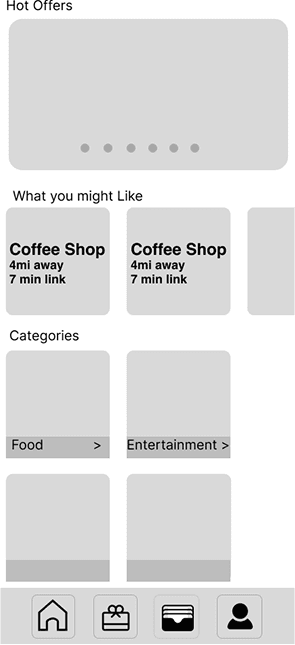
OFFERS
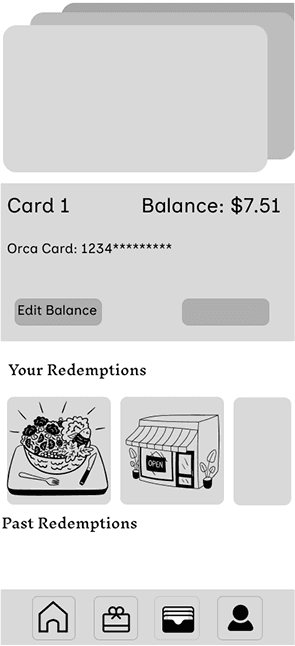
WALLET
EXPLORE
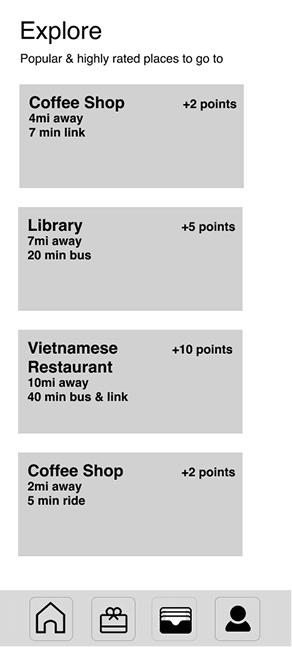
For the Low-Fidelity Testing we created six mockup screens that would make up our app's primary navigation
MID-FI TESTING
SCREEN MOCKUPS
HOME PAGE (POINT TRACKER)
ALERTS
EXPLORE (FOOD)
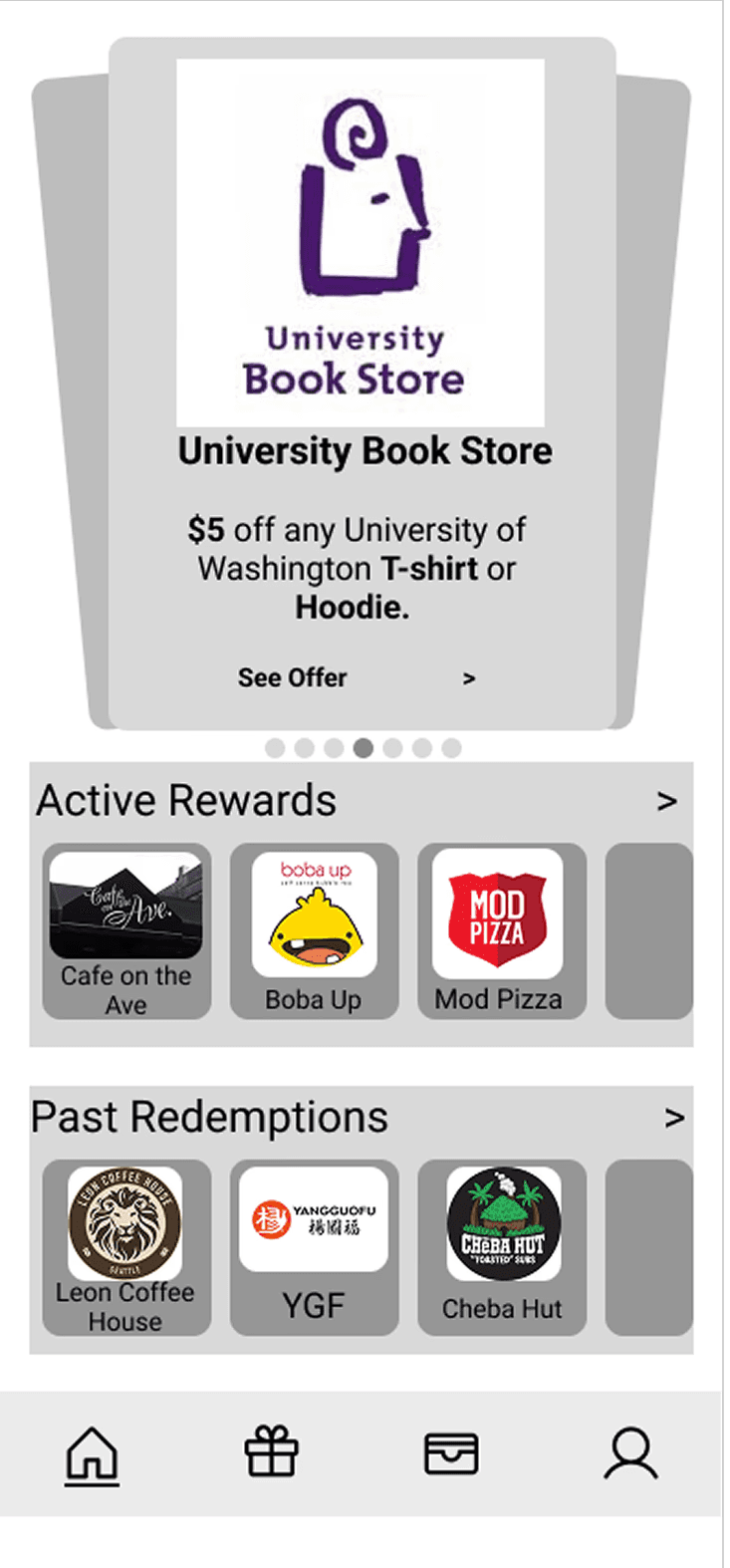
WALLET
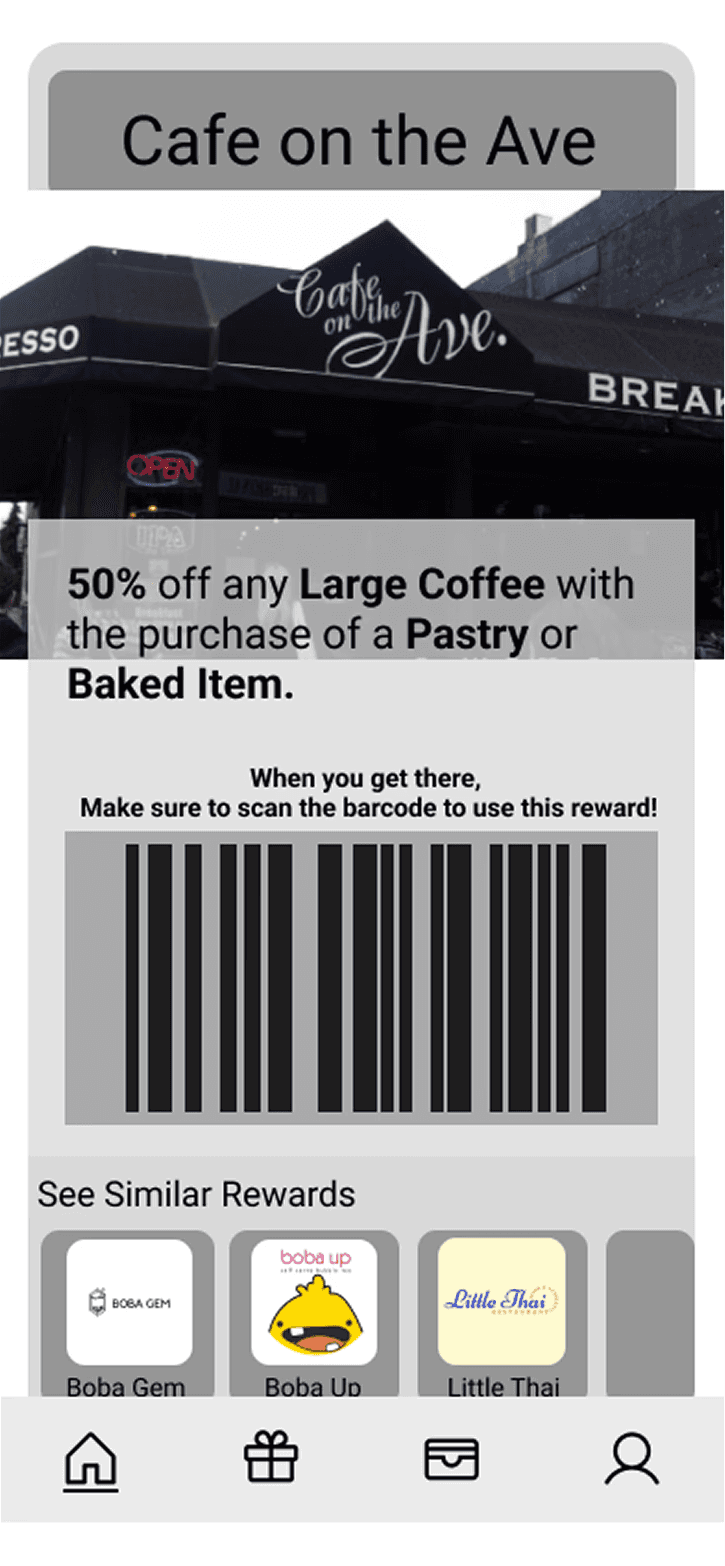
WALLET
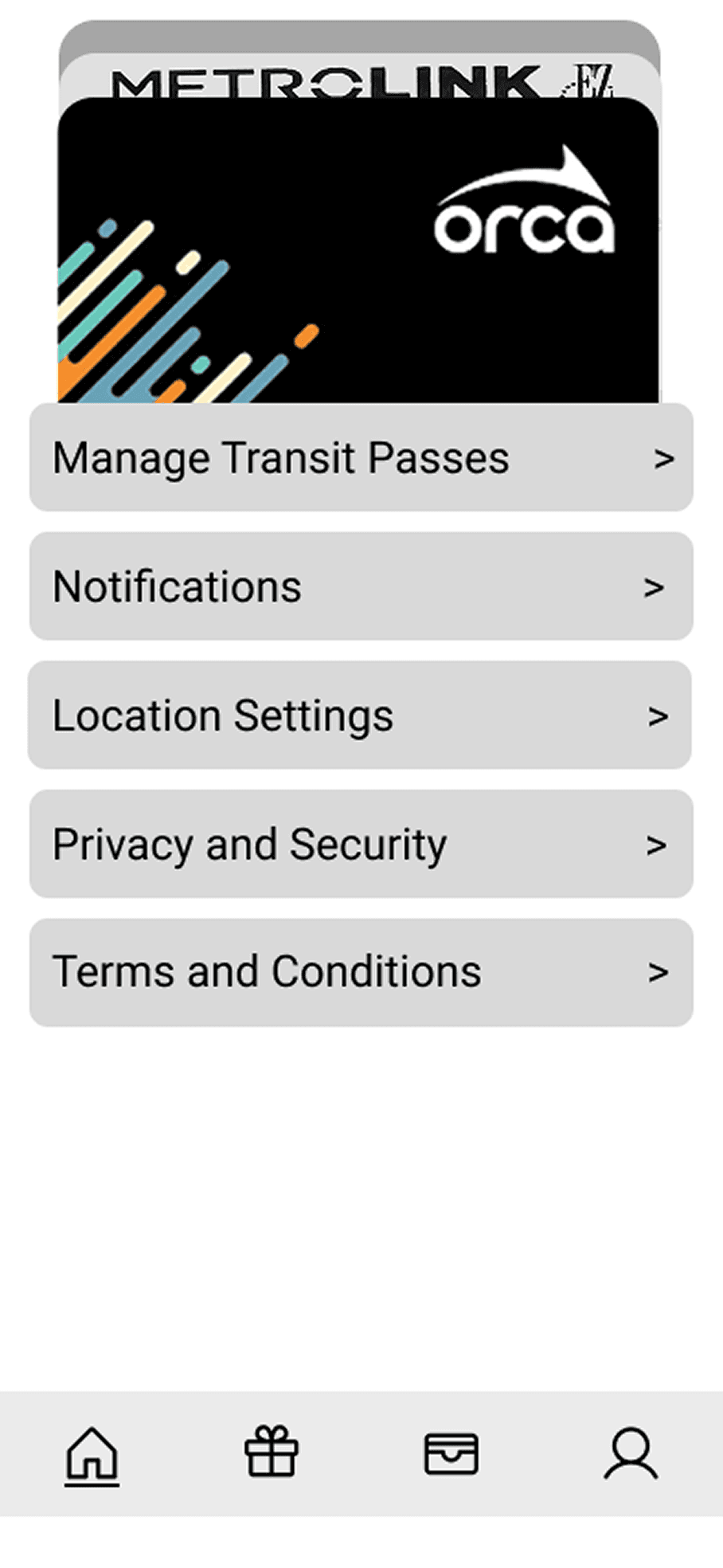
PROFILE
USER FEEDBACK
USER TESTING PROCESS
To evaluate the early design direction, I conducted low-fidelity usability testing with participants completing two core scenarios: discovering a nearby coffee shop while checking transit alerts, and redeeming a coffee coupon using their point balance. I provided minimal guidance to understand how users naturally navigated the prototype and where their expectations differed from the design. Throughout each session, I asked participants to think aloud, recorded points of hesitation or confusion, and collected both behavioral observations and short post-task reflections.
WHAT WE LEARNED
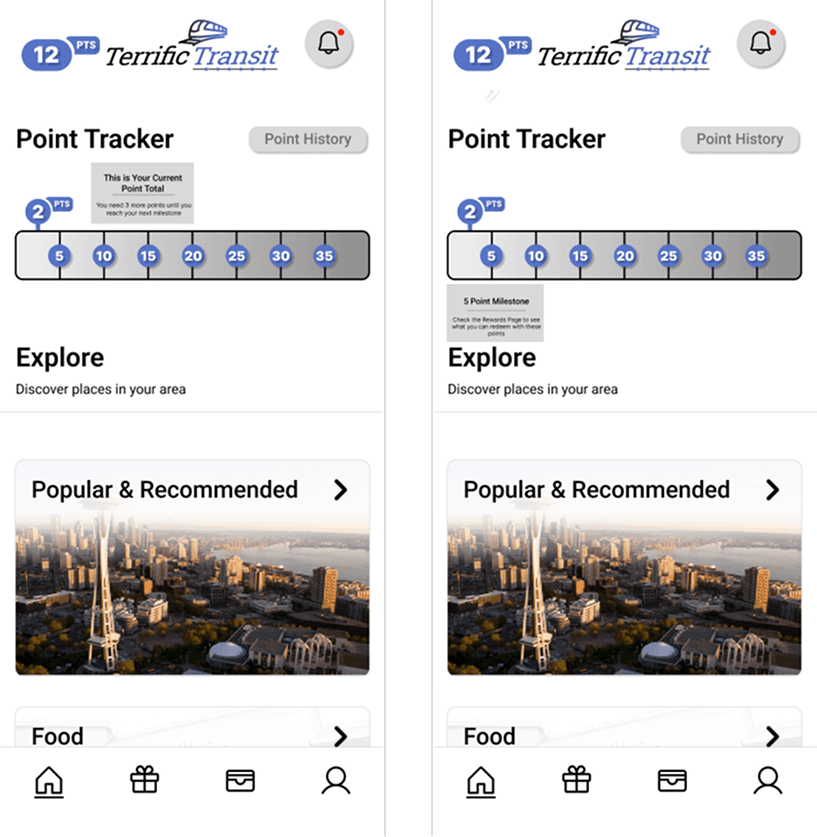
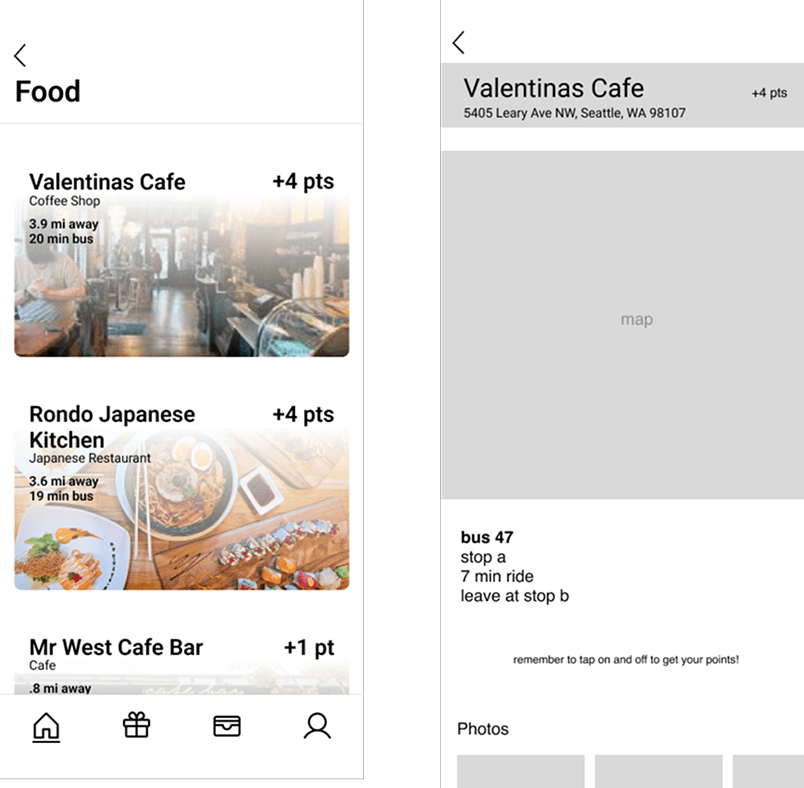
Users responded positively to the point tracker and the categorized Explore page, which helped them understand how points function in the app. However, several interactions created friction—especially distinguishing redeemable rewards, locating alerts, and interpreting trip-duration times. Many participants also expected more tappable elements and clearer visual cues, highlighting opportunities to clarify the app’s purpose and streamline key flows.
Quantitatively, users completed Scenario 1 in about 50 seconds and Scenario 2 in about 25 seconds, with a 100% success rate. Most errors were small navigation slips (2.33 errors/minute), suggesting ambiguity rather than major usability issues.
HOW FEEDBACK INFORMED ITERATIONS
The feedback led to key improvements in visual clarity and interaction flow. I refined the navigation bar, updated the Point Tracker, and redesigned the rewards display to make redemption status clearer. I also added a “Current Points” icon, improved the Wallet with local point deals, and renamed “Your Redemptions” to “Active Redemptions.” Other adjustments included clearer trip-duration labels, simplified alerts, added color and product previews, mini-map snapshots, and relocating transit passes—creating a more cohesive and intuitive experience overall.
NEXT STEPS
These early findings have shaped the next round of design priorities: enhancing the clarity of reward systems, strengthening navigation cues, expanding interactive elements in the prototype, and refining the visual hierarchy on high-traffic pages. As I continue iterating, I will incorporate more mid-fidelity interactions to validate whether the updated flows improve efficiency and reduce cognitive effort for first-time users.
FINAL
PROTOTYPE
FEEDBACK
CRITICAL SOLUTIONS
User feedback showed confusion around how rewards were redeemed and accessed, so I refined this flow to make the experience more intuitive. When a user purchases a reward, a confirmation message now guides them on how to retrieve and use it from the Wallet, reducing uncertainty around next steps. I also continued developing the wireframes for core pages, adding clearer interactions and cues that better communicate the purpose of the app and support smoother task completion.
MODERATE SOLUTIONS
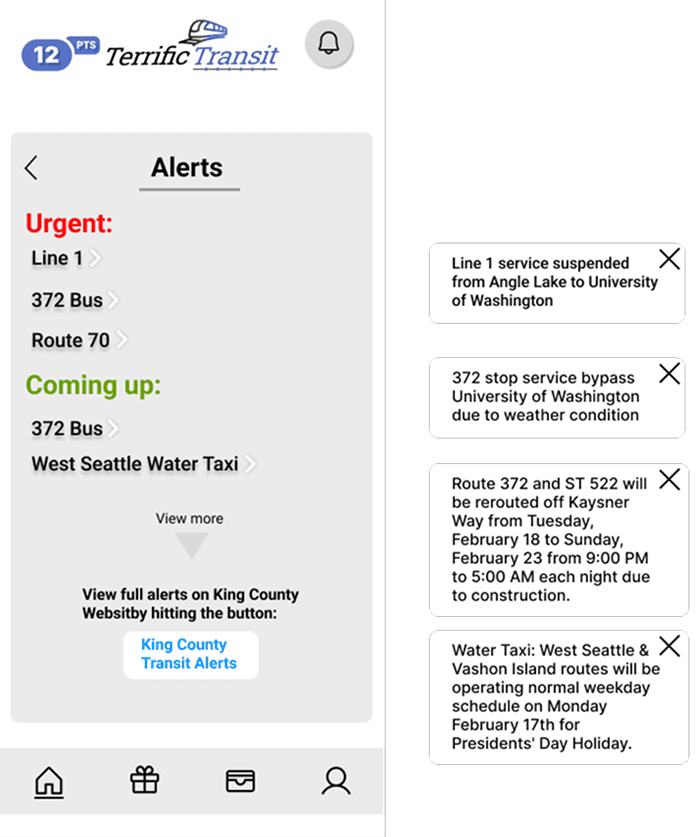
Several mid-level issues centered on clarity and visual hierarchy. To help users quickly understand which rewards they could redeem, I adjusted the design so eligible rewards appear in a darker shade than those out of reach. I also clarified the trip-duration label to read “trip duration from your current location,” addressing confusion around what the time referred to. Since some testers struggled to locate their point total, I plan to investigate whether this is a broader usability issue. Additionally, vague alert categories such as “Coming Up” and “Urgent” were replaced with descriptive, clickable buttons that reveal each alert’s purpose.
MINOR SOLUTIONS
Smaller refinements focused on visual polish and overall completeness. Users hoped for a more engaging and energetic interface, so I introduced additional color and emphasis on high-traffic pages like Home and Rewards. As I continue developing the prototype, I am expanding interactive elements to create a more realistic app experience. I also began exploring ways to seamlessly integrate transit cards and reward cards within the Wallet, ensuring the layout remains intuitive while consolidating key features into a single, accessible space.
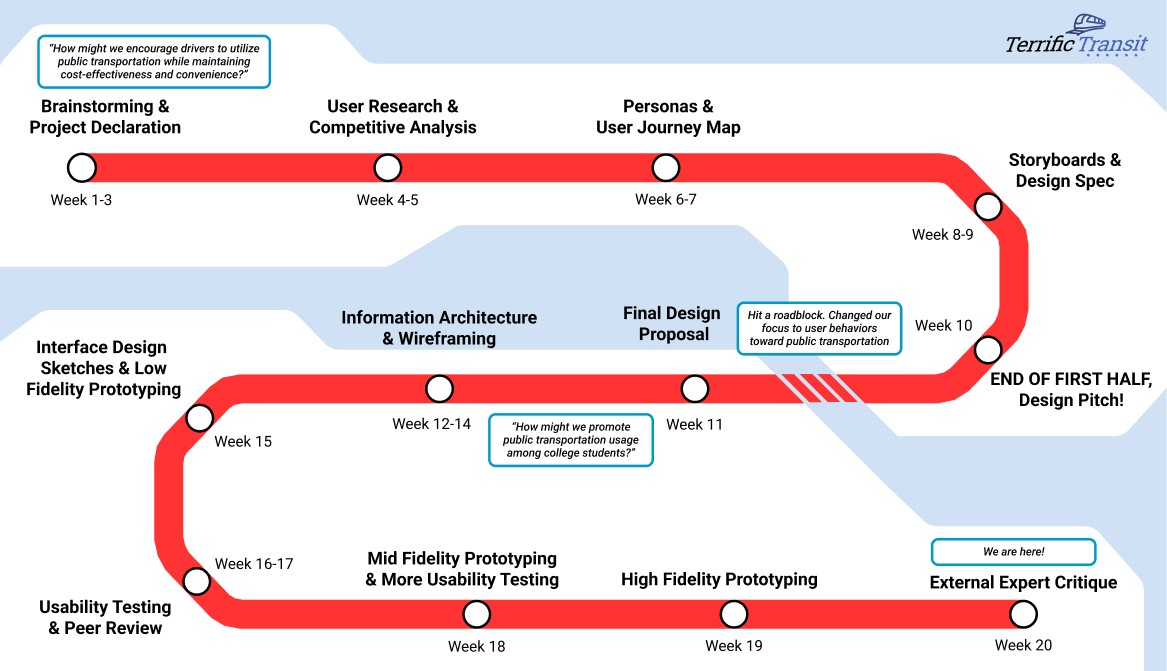
TIMELINE
ABOUT US
THEO TZANKOV

theotza(at)uw.edu
OLIVER CHEN

chenyu22(at)uw.edu
SAM LOPEZ

sam816(at)uw.edu
MADISON MCLEAN